Learn how to use color corrector like a pro with this complete guide. Discover the best color corrector for dark circles, redness, acne, pigmentation, and dull skin for a flawless makeup base.
Have you ever wondered why your foundation still doesn’t completely hide dark circles, redness, or acne marks? The secret isn’t applying more makeup—it’s learning how touse color corrector correctly. Color correcting is one of the easiest makeup techniques that instantly creates a smoother, brighter, and more even complexion before foundation.
Short on time? I’ve linked some of my favorite color correctors below
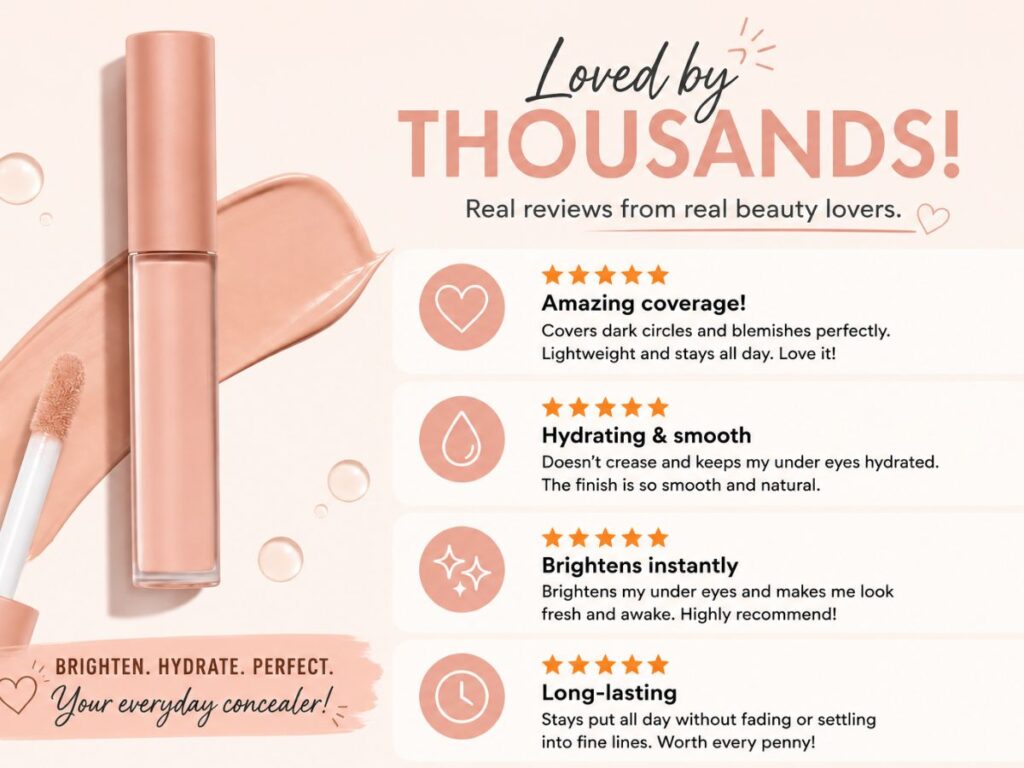
Hydrating Color Corrector loved by Many!! https://amzn.to/4xCHPnb
Professional Makeup CC Palette
Filter Finish Pressed Color Corrector
Full Face Palette
What Is a Color Corrector?
A color corrector is a
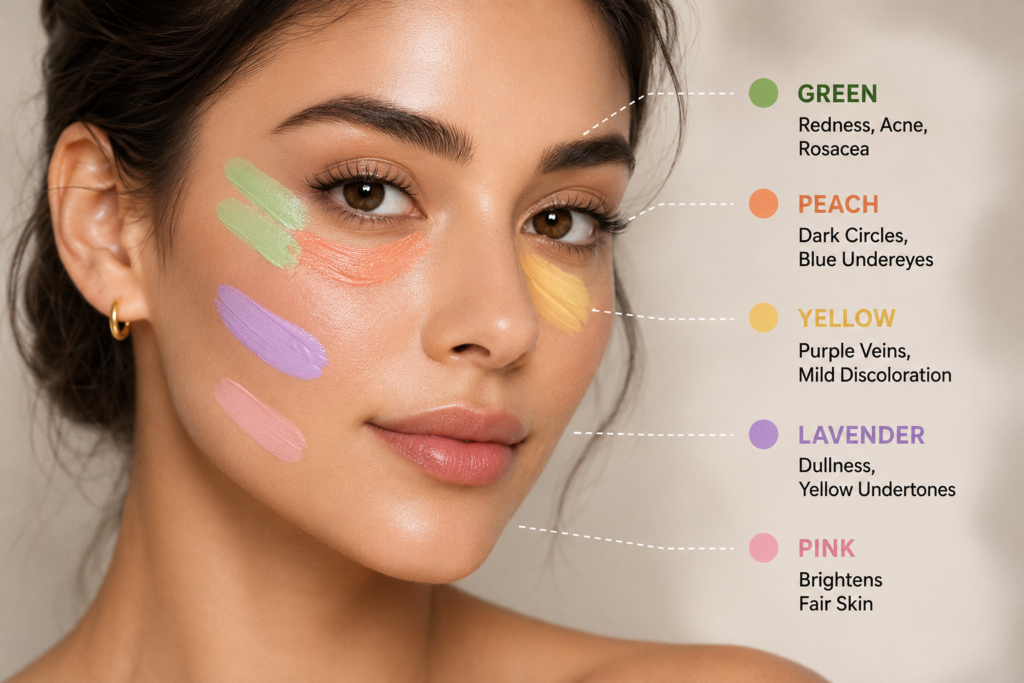
makeup product designed to neutralize unwanted skin discoloration before applying concealer and foundation. Instead of covering imperfections with thick layers of makeup, color correctors use opposite colors on the color wheel to balance uneven tones.
Once you understand how to use color corrector, you’ll notice that your concealer blends better, your foundation looks lighter, and your makeup appears much more natural.
How to Use Color Corrector Step by Step
If you’re new to color correcting, don’t worry. Follow these simple steps for the best results.
1. Start with Hydrated Skin
Always cleanse and moisturize your face before makeup. Dry skin can make color correctors look patchy and difficult to blend.
2. Apply a Primer
A lightweight primer creates a smooth base and helps your makeup stay in place throughout the day.
3. Apply Color Corrector Only Where Needed
One of the biggest mistakes people make is applying color corrector across the entire face.
Instead, dab a small amount only on areas with discoloration. This is the most important rule when learning how to use color corrector because less product creates a more natural finish.
4. Blend Gently
Use a damp makeup sponge or your fingertip to pat the product into the skin. Avoid rubbing, as it removes the pigment.
5. Apply Concealer
Once the corrector is blended, apply concealer over the corrected area. The concealer brings the skin back to an even tone.
6. Finish with Foundation
Use a light layer of foundation to complete your base. Because you’ve already neutralized discoloration, you won’t need heavy coverage.
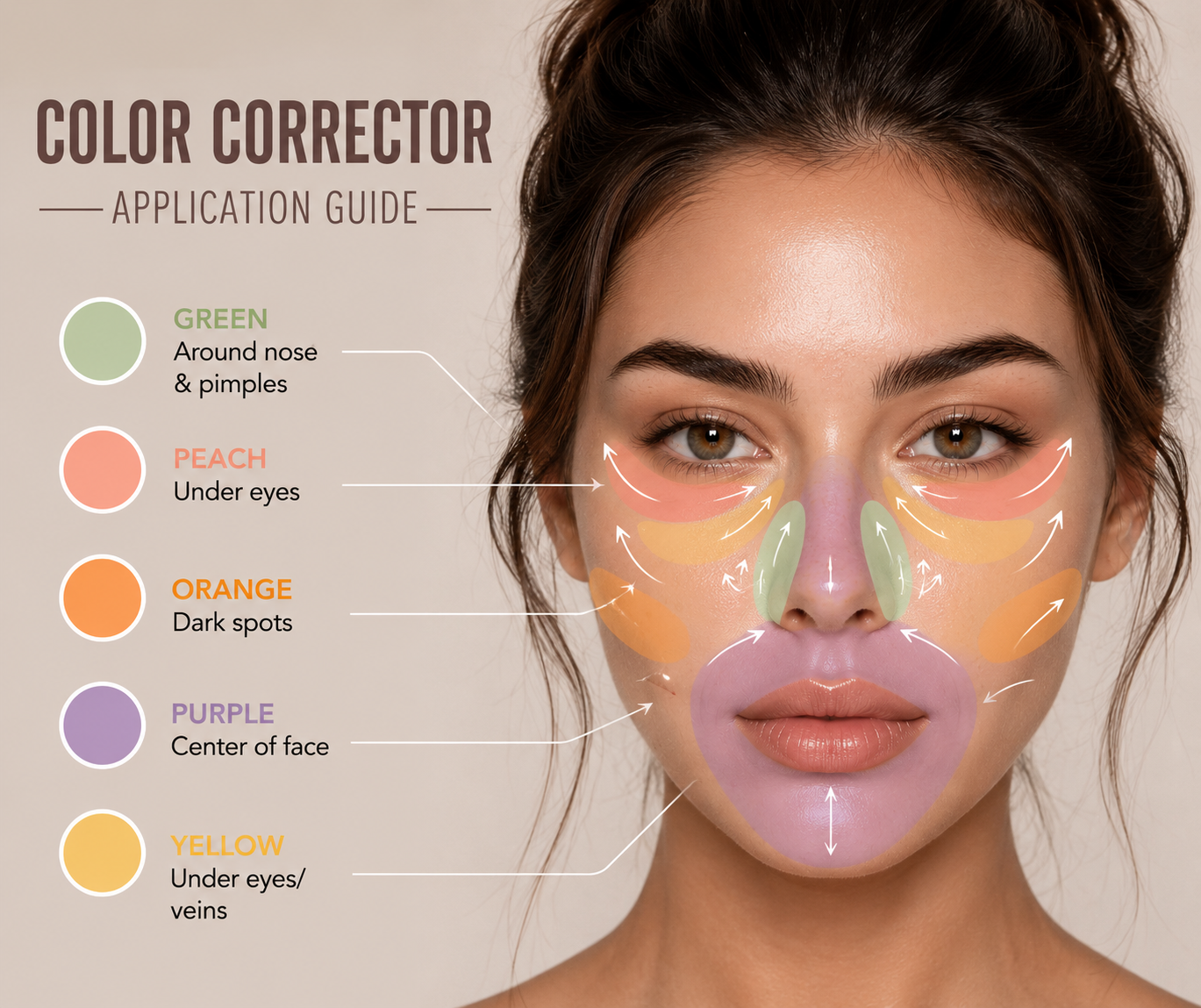
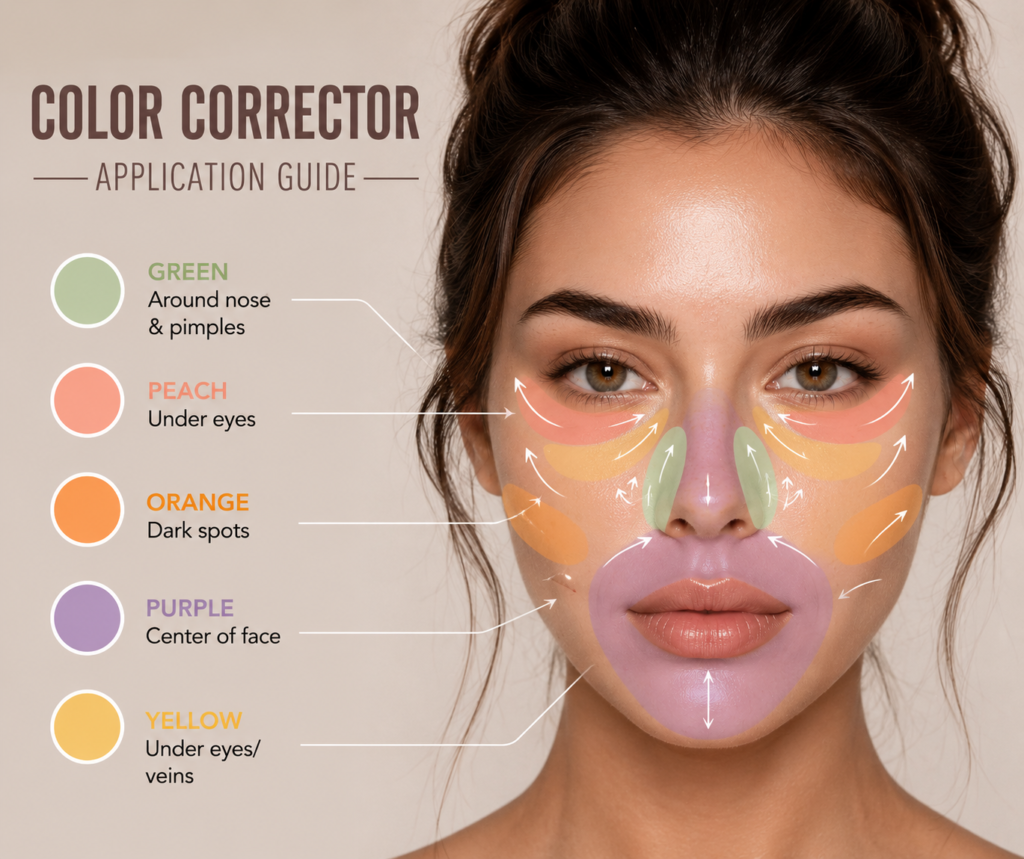
Which Color Corrector Should You Use?
Choosing the right shade is just as important as knowing how to use color corrector.
| Color | Best For |
|---|---|
| 💚 Green | Redness, acne, rosacea |
| 🍑 Peach | Light dark circles, fair to medium skin |
| 🧡 Orange | Deep dark circles, pigmentation, beard shadow |
| 🟡 Yellow | Purple veins, mild bruises |
| 💜 Lavender | Dull or yellow-looking skin |
| 🩷 Pink | Brightening fair skin |
Match the Right Color Corrector to Your Skin Tone
Not every shade works for every complexion.
Fair Skin
Peach and pink correctors brighten blue under-eye circles without looking heavy.
Medium Skin
Peach and yellow work well for mild pigmentation and dark circles.
Tan Skin
Orange effectively cancels stubborn discoloration while green helps reduce redness.
Deep Skin
Deep orange or red-orange correctors provide the most natural-looking coverage for hyperpigmentation.
Understanding your skin tone is another key part of how to use color corrector successfully.
Lesser-Known Color Corrector Tips
Professional makeup artists use a few tricks that many beginners don’t know.
Let It Sit for 30 Seconds
After applying the corrector, wait about half a minute before layering concealer. This prevents the products from mixing together.
Warm Cream Correctors First
Rub a small amount between your fingertips before applying. The warmth helps it melt into the skin.
Correct Before Spot Concealing
Always neutralize discoloration first, then use concealer only where needed. This keeps your makeup looking lighter and more natural.
Use Thin Layers
A tiny amount is usually enough. Thick layers often show through foundation instead of disappearing underneath it.
Common Color Correcting Mistakes
Even if you know how to use color corrector, these mistakes can ruin your makeup.
- Applying too much product
- Choosing the wrong color
- Skipping concealer afterward
- Blending too aggressively
- Applying foundation immediately without letting the corrector settle
- Using bright colors instead of neutralizing discoloration
Remember, color correctors should disappear once your foundation is applied.
FAQs
Should color corrector go before foundation?
Yes. Always apply color corrector before concealer and foundation.
Which color corrector is best for dark circles?
Peach works best for fair to medium skin, while orange is ideal for tan and deeper skin tones.
Can beginners use color corrector?
Absolutely. Once you understand how to use color corrector, it’s one of the easiest makeup techniques to master.
Can I skip foundation after using color corrector?
Yes. For a natural makeup look, you can use color corrector with concealer instead of full-coverage foundation.
Learning how to use color corrector can completely change the way your makeup looks. Instead of layering thick foundation to hide imperfections, color correcting neutralizes discoloration at the source, giving you a smoother and more natural finish.
Whether you’re covering dark circles, redness, acne scars, or pigmentation, the secret is using the right shade in thin layers and blending carefully. Once you master how to use color corrector, you’ll use less makeup while achieving a flawless complexion every time.
Once your base is perfected, learn how to create the perfect Soft Glam Makeup look with our complete guide.
https://pinkvanityvibes.com/best-5-soft-glam-makeup-products-for-a-flawles/